Let’s talk about the holy grail. The magic money printing machine. A Trading Bot that coldly and mechanically executes your strategy better than you ever could.
Every trader eventually has the exact same fantasy: What if I could just code my edge, spin up a server, and let a bot trade for me while I sleep?
They say the absolute hardest part of trading is psychology. Managing the fear, the greed, the hesitation, and the revenge trading is what breaks most people. A fully automated bot gets human emotion completely out of the equation. Furthermore, if you are balancing trading with a demanding day job, a machine can sit on the charts 24/7, relentlessly filling in the gaps when you can’t be at your desk.
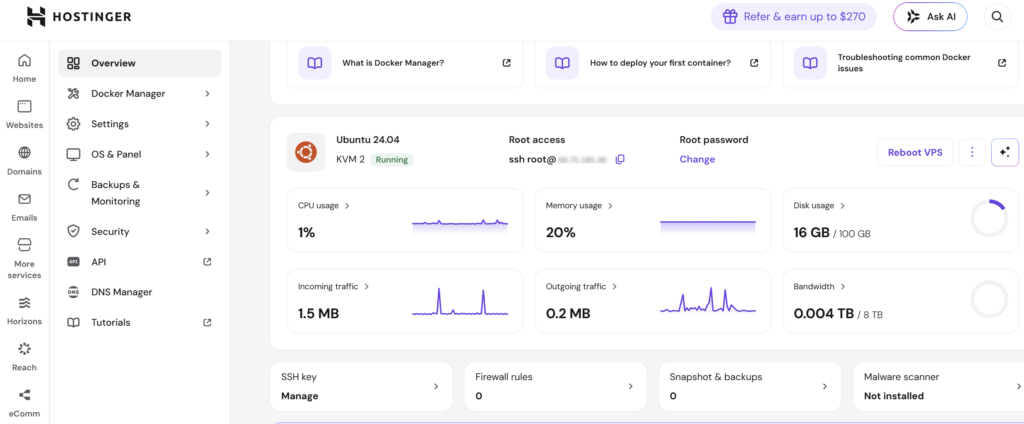
Lately, I’ve been actively chasing that dream. I have been setting up a Virtual Private Server (VPS) running Hermes—an autonomous AI agent—to try and build a completely automated crypto trading bot.
It is a massive work in progress. I haven’t managed to fully pull the human element out of the trading process just yet, but it is a dream absolutely worth chasing. It’s a dream many will say is impossible, that I am being unreasonable. It’s not the first time – see this post. Here is a look at the reality of building the machine.
The Translation Problem
You might have a brilliant strategy in TradingView, but getting that strategy to execute autonomously in the real world is a completely different beast. The trickiest part of this entire process is ensuring that a strategy developed in Pine Script actually translates accurately into Python, which is what the bot relies on to execute.
Here is a secret: you do not have to be a hardcore programmer to do this. My actual coding skills would be relentlessly mocked by any serious software engineer, yet I currently have a working trading bot operating in a testing environment.
How? Because I use Large Language Models like Gemini and ChatGPT to do the heavy lifting. Having an engineering mindset and a general understanding of the strict, unforgiving logic that coding requires is highly beneficial, but you do not have to go back to university to learn the syntax. The AI writes the code; you supply the logic and manage the architecture.
(If you are curious about the technical foundation of the agent I am using, check out this excellent Hermes tutorial here.
The Mirror of Automation
Building a bot forces a brutal reality check on your trading strategy. It strips away all your subconscious biases and reveals exactly where your human pattern recognition has been covering up holes in your system.
When I was manually trading my edge, I would look at a setup and occasionally pass on it. If you asked me why, I’d say, “I just knew it was a bad trade.”
A bot doesn’t “just know.” A bot executes exactly what you tell it to execute. If you don’t formalize the exact reasons why a setup is bad into hard mathematical filters, the bot will take that terrible trade every single time. Automating forces you to confront the fact that your “rule-based” strategy probably has a lot of unwritten rules.
Optimization on Steroids
Once you actually get the logic locked in, Hermes becomes a powerhouse for testing and optimizing.
Human backtesting is slow. A bot can rip through datasets and ask the microscopic questions: You enter a short when the RSI on BTCUSDT is over 70—but what if 67 is mathematically better? Sure, dropping it to 67 means you take a couple more bad trades, but what if you add an overwhelming amount of good ones?
What about your exits? Maybe a 1.5:1 Risk/Reward ratio isn’t actually optimal for your specific entry trigger. Maybe dropping it to 1:1 drastically cuts down your loss rate and smooths out your equity curve. Or maybe your strategy inherently performs best when the runners are allowed to run, and your fixed take-profit target is actually choking out your biggest wins. The bot can test all these variables exponentially faster than a human ever could.
A Massive Warning: Keep the Leash On
I cannot stress this enough: Be incredibly cautious about giving an experimental bot live money.
I recently tried to implement what I thought was an incredibly simple system. It was literally one indicator for the entry trigger, with just one other indicator acting as a filter. I had it trading on 15-minute candles, meaning it had plenty of time and opportunity to calculate a profitable trade.
It got the first three trades completely wrong. On one of them, it entered a position three full hours late, long after the move was entirely over.
If that had been live capital, the bot would have happily bled my account trade after trade. You must sandbox these systems. Run them on paper trading accounts. Watch them execute in real-time. Debug the misfires.
Building a fully automated bot is frustrating, complex, and messy. But the moment you watch a string of code autonomously execute a perfect trade based on your logic, you realize why the pursuit is so addictive.
Stay sharp. We’ll see you on the digital frontier.