Crypto never closes.
That sounds like freedom when you first hear it.
No opening bell. No closing bell. No banker hours. No suit in New York deciding when the casino doors unlock. Bitcoin does not care whether it is Sunday morning, Christmas Eve, or 2:17 a.m. while you are lying in bed convincing yourself you are “just checking the chart.”
At first, that feels like power.
Then it becomes a trap.
Because if the market is always open, the undisciplined trader slowly becomes always open too.
One more glance. One more candle. One more alert. One more “quick” look at SOL before bed. One more scroll through X to see if there is a narrative forming. One more tiny dopamine hook buried in the side of the brain like a fishing barb. (For those with ADHD, you know how seductive that can be).
And eventually, you realize the brutal irony:
You came to trading because you wanted freedom, but now the chart owns your nervous system.
That is not the drift.
That is captivity with better monitors.
The Lie of Total Availability
There is a seductive idea in trading that the serious trader is always available.
Always watching. Always prepared. Always ready to pounce.
This sounds disciplined, but it is usually just anxiety wearing a tactical vest.
The market offers infinite information. Your brain does not have infinite bandwidth. This is especially true if you are trading while running a business, working a full-time job, managing clients, raising a family, building side projects, or trying to live an actual human life outside the glow of TradingView.
The professional answer is not to become available to every candle.
The professional answer is to define when the market is allowed to have your full attention.
I call this the Edge Window.
The Edge Window is a scheduled block of time where you are authorized to hunt for trades.
Not browse. Not doom-scroll. Not “vibe check.” Not repeatedly refresh the same 15-minute chart hoping the next candle gives you permission to feel alive.
Hunt.
You enter the window with a process. You leave the window with either a trade, an armed system, or a clean stand-down.
That is it.
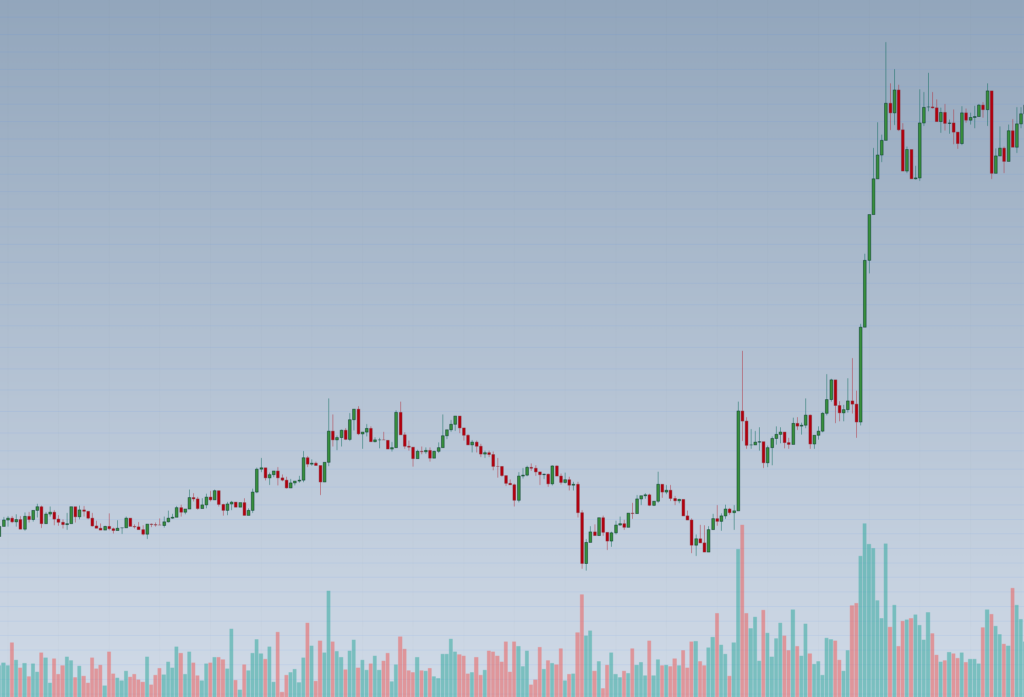
The Market Is 24/7. Your Edge Is Not.
This is the key distinction.
The market may run 24 hours a day, 7 days a week. But your edge does not exist equally across all those hours.
Some hours are liquid and clean. Some hours are thin and weird. Some sessions produce structure. Some sessions produce chop dressed up as opportunity. Some candles are information. Some candles are bait.
A trader without an Edge Window treats every hour as equally important.
That trader is doomed.
Because if every hour matters, every move feels like a personal invitation. You start believing the chart is constantly speaking to you. Eventually, you cannot tell the difference between signal and noise because you have been staring at both for too long.
The Edge Window forces a better question:
When am I most likely to make a clear, disciplined, executable decision?
For me, the answer is usually not late at night. It is not while I am tired. It is not while half my brain is still holding a consulting file in RAM. It is not after three losses, one argument, two Coke Zeros, and a phantom breakout on a coin I was not planning to trade.
My best decisions happen when I am fresh, calm, and operating inside a defined system.
That is the window.
The Edge Window Protocol
The protocol has five parts:
- Map the battlefield.
- Hunt the setup.
- Arm or abort.
- Execute surgically.
- Shut the machine down.
This sounds simple because it is supposed to be simple.
A trading system that only works when you are at peak intelligence, peak emotional control, and peak energy is not a system. It is a motivational poster with leverage. The fact is there are so many different ways to profitably trade that we can all almost certainly find a profitable edge. However, having the emotional discipline to stick to that edge, to ignore the voice which is telling you to delete your stop loss because you just know price is going to rebound soon, that is what will make you profitable.
A real system must function when you are slightly tired, slightly impatient, and slightly tempted to do something stupid. But no system will work when you are exhausted, desperate, and irrational.
That is where the Edge Window earns its keep.
1. Map the Battlefield
The first step is not looking for an entry.
This is where many traders go wrong. They sit down, open the lowest timeframe, and immediately start hunting for something to do. That is like being dropped into a city at street level with no map, no compass, and no idea whether you are in friendly territory.
Before I care about the next 5-minute candle, I need to know the weather system.
I start with the higher timeframe.
What is Bitcoin doing? What is the 4H structure? Are we trending, ranging, breaking down, or chopping sideways in a fake little blender designed to harvest the impatient? Is my preferred asset moving with the market, against the market, or acting drunk in the corner?
The higher timeframe gives context.
Context does not make the trade safe. Nothing makes the trade safe. But context tells me whether I am trading with the current, against the current, or inside a whirlpool.
This is the first job of the Edge Window:
Know what kind of day it is before deciding what kind of trader to be.
Some days are trend days. Some days are scalp days. Some days are trap days. Some days are “go outside and touch grass” days.
The trader who cannot tell the difference pays tuition until he can.
2. Hunt the Setup
Once the battlefield is mapped, I drop down to the execution timeframe.
This is where multi-time-frame analysis becomes practical instead of theoretical. The higher timeframe gives me the bias. The lower timeframe gives me the trigger.
But the trigger must be specific.
Not “it looks good.” Not “it feels like it wants to go.” Not “this candle has momentum.”
That kind of language is how traders launder impulse into analysis.
The Edge Window requires a defined setup.
For example:
- Price is aligned with the higher-timeframe bias.
- The asset is near a level that matters.
- My entry trigger appears on the lower timeframe.
- Stop placement is obvious before entry.
- The target provides enough reward to justify the risk.
- The trade can be explained in one sentence.
That last one matters.
If I cannot explain the trade in one sentence, I probably do not have a trade. I have a mood.
A good trade sounds boring when described clearly:
“BTC is in a 4H downtrend, SOL rejected the prior lower high, and I am shorting the 5m breakdown with a stop above the retest.”
That is a trade idea.
My momentum indicator alert triggered, suggesting a long trade. This aligns with the recent bias, and the demand zone which printed just slightly below the current price.
That is also a trade idea.
This is not:
“It kind of looks heavy, and funding is weird, and I saw someone on X mention liquidity below, and the RSI is doing something interesting if you squint.”
That is a séance.
The Edge Window does not allow séances.
3. Arm or Abort
At the end of the hunting phase, there are only three acceptable outcomes:
- Take the trade now.
- Arm the system and wait for the trigger.
- Abort and log No Trade.
Notice what is missing.
There is no fourth option called “keep watching because something might happen.”
That option is where accounts go to bleed slowly.
If the setup is ready, execute.
If the setup is close but not confirmed, arm the Sentinel.
If the setup is not there, abort.
This is the point where most traders fail because they confuse preparedness with staring. They believe that if they stop watching, they are being irresponsible.
No.
If your setup can be defined, it can usually be armed.
If it cannot be defined, it probably should not be traded.
This is where alerts become a psychological weapon. A good alert lets you leave the screen without abandoning the market. It turns the chart from a slot machine into a doorbell.
The market does not get unlimited access to your attention.
It gets permission to knock.
(End of Part 1.)
Fine Print: I am a consultant, but I am not your financial advisor. The content on Chart Drifter is a personal log of my strategies and is strictly for educational and entertainment purposes. Never trade with money you cannot afford to lose.