The stock market has a mercy button. At 4:00 PM EST, the bell rings, the ticker stops, and the traders go home. Crypto has no mercy. It is the only market in human history that runs 24 hours a day, 7 days a week, 365 days a year. This creates a unique psychological toxicity. You can go to sleep, wake up, and realize that while you were dreaming, Bitcoin moved 10%, your favorite altcoin doubled, and—according to your strategy—you “missed” the trade of the month. It feels like you lost money. You didn’t, of course. Your balance is exactly the same as it was when you went to bed. But the Phantom Loss feels real. It whispers, “If only you had stayed awake.”
The Leash of the Alert
To combat this, we set alerts. We tell ourselves it’s responsible. “I won’t stare at the chart; I’ll just set an alarm for when SOL hits $130.”
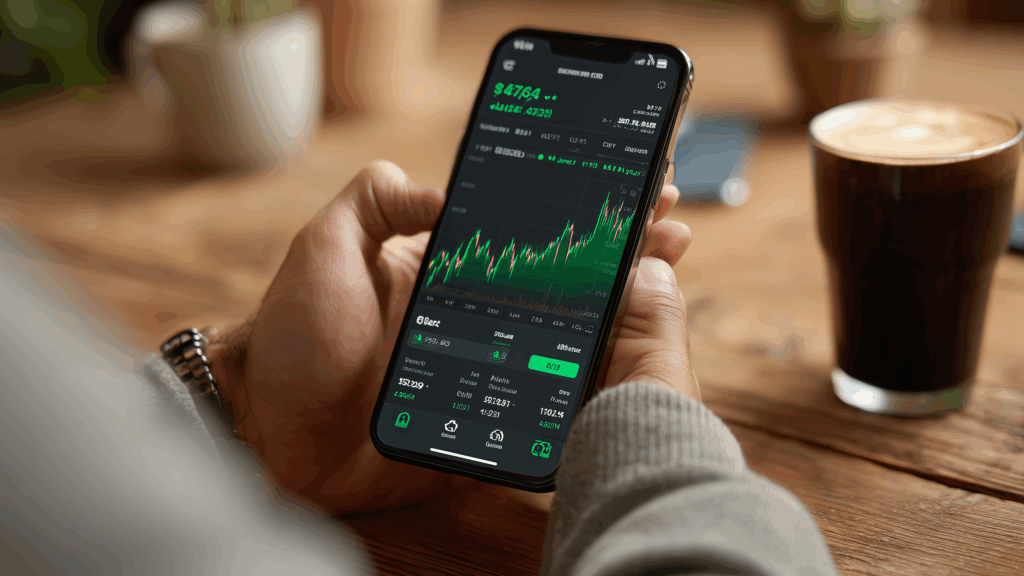
But this turns your phone into a leash. You are at dinner with friends. You are watching a movie with your spouse. The phone buzzes. Your brain immediately leaves the room. You aren’t listening to the conversation anymore; you are wondering if that buzz was a spam email or the Breakout Signal. You check. Then you open the app. Then you are calculating position size under the dinner table.
You are physically present, but mentally, you are in the order book. Modern apps have made it too easy. You don’t need a desk anymore; you carry the entire exchange in your pocket. So you sneak a trade. You wait for a lull in the conversation, or you pretend to check a text message, and you quickly swipe to open a position. It takes three seconds. But once the trade is open, you are trapped. You put the phone down, but now you can feel it burning in your pocket. You are nodding and smiling at your friend’s story, but inside, you are watching a 1-minute candle form in your mind, calculating your unrealized PnL, and wondering if you should check it just one more time.
The Forced Disconnect
I have found only one reliable solution to this: The Forced Disconnect. Willpower is overrated. If I have service, I will check the charts. So I go where the signal cannot follow.
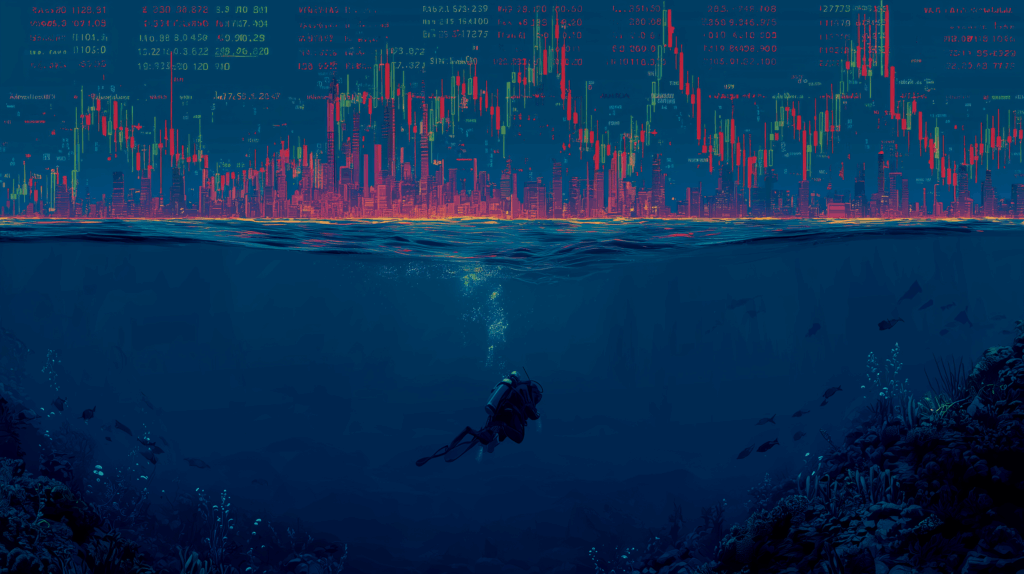
I am a scuba diver. There is no Wi-Fi at 80 feet. There is no LTE signal on a reef in Cozumel. When I am underwater, focusing on my buoyancy and my air consumption, the market ceases to exist. For 45 minutes, I am physically incapable of trading.
It is the only time my brain truly unhooks from the matrix.
You don’t need to be a diver to do this, but you do need an environment where the “Off-Switch” is external, not internal. Go for a hike in a dead zone. Leave your phone in the car while you go to the gym. Create a physical barrier between you and the casino.
The Profit of stepping Away
Here is the irony: Stepping away usually makes me more money.
When you sit at the screen for 12 hours, you get bored. The human brain hates boredom; it craves dopamine. If the market isn’t giving you a valid setup, your brain will start to manufacture one.
This is the slippery slope of Overtrading, and it usually happens in three stages:
- The Bargain: You have a proven 3-step strategy. But you’ve been waiting four hours for a trade. So you convince yourself that Step 1 is “optional.” You tell yourself, “Well, Steps 2 and 3 are really the core of the move. I can front-run the confirmation.”
- The Erosion: Once you profit from a sloppy trade, the discipline collapses. Suddenly, you aren’t looking for the full setup anymore; you are just looking for Step 3 (the entry trigger) without the context. You have abandoned the edge you worked so hard to backtest.
- The Hallucination: Finally, you stop using the system entirely. You start trading on “gut feeling” and visual patterns. You are now relying on the same part of your brain that looked up at the sky yesterday and swore a cloud looked like the Starship Enterprise.
That isn’t trading; that’s pareidolia – the tendency to see patterns in random noise. You are seeing patterns in the noise because you need to see them.
When I come back from a dive, my head is clear. The dopamine cravings are gone. I got more than enough novelty following an angelfish as he swam around an outcropping of coral. My mental chaos vanished the moment I spotted that turtle and settled down, hovering a foot above the sandy seafloor, watching him nibble. When I come back, everything is different. I look at the chart with fresh eyes. Often, I see that the “urgent” move I was worried about was actually a trap. By missing the noise, I saved my capital.
The Market Will Wait
The fear that “this is the last opportunity” is a lie. The market has been here for decades (in some form) and it will be here long after we are gone. There will always be another breakout. There will always be another dump. There will always be another trade.
But you only have one life. Don’t spend 100% of it staring at a 15-minute candle.
Pause the alerts. Put on the wetsuit (or the hiking boots). The chart will be there when you get back.