Yesterday I did something that would have felt impossible to old-me:
I watched the market for a long time and made zero trades.
Not because I’m enlightened. Not because I “transcended greed.”
Because the market felt borderline random—one of those sessions where you can still find a trade… if you’re willing to lower your standards enough.
It was also a day with major earnings announcements in the background, and that’s a special kind of trap. Not just because volatility spikes—but because it’s incredibly easy to fool yourself into thinking you understand how the news will move price.
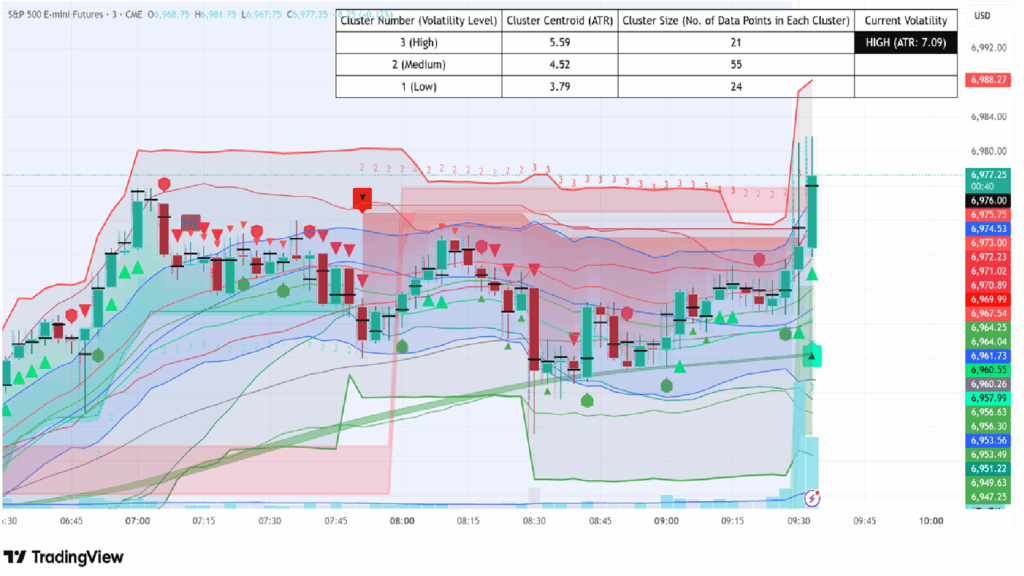
A perfect example: the earnings report that seemed to trigger the bigger risk-off move was Microsoft. On the surface it looked great: beating expectations and pouring money into AI. But the market heard something else: “Those profits aren’t really profits if they’re immediately being shoveled into spend.” Price dropped hard.
And when the S&P 500 drops, crypto tends to drop harder.
That’s the lesson: even when you “know the news,” you don’t know the interpretation. You don’t know the second-order narrative the market is about to choose.
So I watched. I passed. I protected my account from the most expensive mistake in trading: forcing it.
Later I saw a tweet making the rounds (with the usual marketing gloss): most traders blow up not because they lack a secret indicator, but because they repeat the same behavioral failures.
I agree with the core idea—and I want to add my own list.
Not as pessimism. Almost the opposite.
Because knowing how traders fail is one of the fastest ways to stop bleeding and start building.
1) They confuse activity with progress
They feel like a trader only when they’re in a trade.
So when the market is unclear, they don’t experience relief.
They experience itch.
Cost: Death by a thousand “okay-ish” trades.
Fix: Define the job correctly:
Your job isn’t to trade.
Your job is to wait for conditions where trading makes sense.
If you want one hard-data reference for this idea, Barber & Odean’s classic research paper Trading Is Hazardous to Your Wealth is worth skimming. You don’t need to read the whole thing—skim the abstract and conclusion and you’ll get the point. It’s a PDF (academic format, not a blog post), but it backs up the uncomfortable truth: frequent trading tends to hurt results for most traders. If you’ve ever felt that “more trades = more progress,” this is a good antidote. Or see this post for another, unconventional way to reduce overtrading.
If you can’t sit still, the market will take your money just to teach you stillness.
2) They can’t tolerate uncertainty—so they invent certainty
Disciplined traders can say, “This is unclear.”
Failed traders tell stories.
They zoom timeframes until they find confirmation. They stack indicators like courtroom witnesses. They call a feeling “confluence.”
Cost: You become a professional rationalizer.
Fix: Rules that force falsifiability:
- If X isn’t present, it’s not your setup.
- If Y breaks, your idea is wrong.
- If you can’t explain it in one sentence, it’s probably not real.
Uncertainty isn’t the enemy. Unstructured decisions are.
3) They change strategies to avoid changing themselves
When a trader loses, there are two painful possibilities:
- The strategy is flawed.
- The strategy is fine, but their execution is flawed.
Guess which one is easier to “fix” emotionally?
New indicators. New mentors. New Discord Servers. Fresh dopamine. No accountability.
But think of what this costs. You spend time developing a system. You have backtested. You have paper traded. You have even live traded with small amounts, as actually booking trades keeps you 100% honest – you can’t deny the losses if they are right there in your exchange history. Your system has worked. It’s not perfect – no system ever is – but it works more than it doesn’t. You are getting to be able to see the setups in real time, and act on them correctly. Then, two losses in a row, and you want to start over. Well guess what – even with an 80% win rate (which over the long term would be the best trading system ever) you are going to occasionally get two losses in a row. But now you are starting over, with an unproven system that you don’t really know well, because it is new. All the time developing the system is lost, and your experience with your new system is effectively zero.
Cost: Eternal beginnerhood.
Fix: Commit to a sample size.
- Run one approach long enough to gather signal.
- Change one variable at a time.
- Treat “system hopping” as a red-flag behavior, not a research project.
4) They size emotionally (and often in the wrong direction)
Most people think the classic mistake is sizing up after wins.
It is. But there’s a quieter version that can also keep you stuck:
You take one loss that felt like a good trade… and you lose faith. So you downsize.
This one is personal, because I’ve done it.
Here’s what it looks like in real numbers:
- You risk 10% and take a loss → account goes to 90%.
- You get spooked and cut risk to 5%.
- Win #1: 5% of 90 = +4.5% → account to 94.5%
- Win #2: 5% of 94.5 = +4.725% → account to 99.225%
Two wins later, you’re still down.
Whereas if the system is solid and you had kept risk consistent, you’d recover faster—and depending on your RR, you’d often be materially ahead sooner. If you want to reduce risk, do it because your plan says so (drawdown limits, regime filters, volatility)—not because one trade bruised your confidence.
The real lesson:
- If your system is solid, don’t lose faith after one clean loss.
- If it isn’t solid… why are you trading real money at all?
Cost: You “win” but don’t progress; you create a slow grind where fear taxes your upside.
Fix: Risk needs to be a policy—slow-changing and rules-based. Not a mood ring.
5) They don’t respect market regime
Some setups work in trend.
Some work in range.
Many traders try to run one playbook in every environment and then call the results “random.”
Cost: The edge disappears and they assume they need a better strategy.
Fix: Make “what environment is this?” step zero.
If you can’t name the regime, you can’t size the risk.
6) They journal like it’s homework
They track P&L. Maybe a screenshot. Maybe “bad entry.”
But they don’t track what matters:
- Was it A+ or forced?
- Was it early?
- Did I follow the stop rule?
- Was I trading the market—or my boredom?
Cost: You repeat mistakes with documentation.
Fix: Journal the error category, not just the result.
If the same mistake shows up three times in a week, that’s not luck. That’s training data.
7) They never train the “stand-down” skill
Most traders want better entries.
Some want better exits.
Very few train the most profitable skill in trading:
Knowing when not to play.
And here’s the twist: it’s not just “avoid news.” It’s “avoid thinking you know what the news means.”
The market doesn’t react to facts. It reacts to interpretations, positioning, and narratives. Sometimes “great news” is bearish, and sometimes “bad news” rips higher.
So you need explicit stand-down rules.
Cost: Boredom trades and narrative trades that bleed accounts quietly.
Fix: Write stand-down triggers like:
- High-impact news / earnings volatility
- Unclear structure / chop
- Fatigue, stress, time pressure
- The feeling: “I need a trade” (huge red flag)
No-trade rules aren’t optional safety rails. They’re part of the system.
This isn’t pessimism. It’s leverage.
Most traders don’t fail because they’re stupid. They fail because they keep doing the same human things under pressure:
- seeking certainty
- seeking action
- seeking relief
- seeking dopamine
The hopeful part is this:
These failure modes are learnable.
Not with motivation. With systems.
Once you stop hemorrhaging money from predictable mistakes, your real edge finally gets room to breathe.
A simple 7-day reset
Day 1: Write your A+ setup in 3 bullets.
Day 2: Write 3 stand-down triggers (no trade).
Day 3: Set fixed risk per trade + max loss per day.
Day 4: Journal rule compliance (yes/no) for every trade.
Day 5: Take only A+ setups. No exceptions. No boredom trades
Day 6: Review mistakes by category (not P&L).
Day 7: Keep what worked. Remove one bad habit. Repeat.
And if you take only one thing from this post, take this:
Doing nothing isn’t what happens between trades.
Doing nothing is the work.