Trading with a full time job
We need to talk about the ‘Side Hustle’ myth and the reality of trading while working.
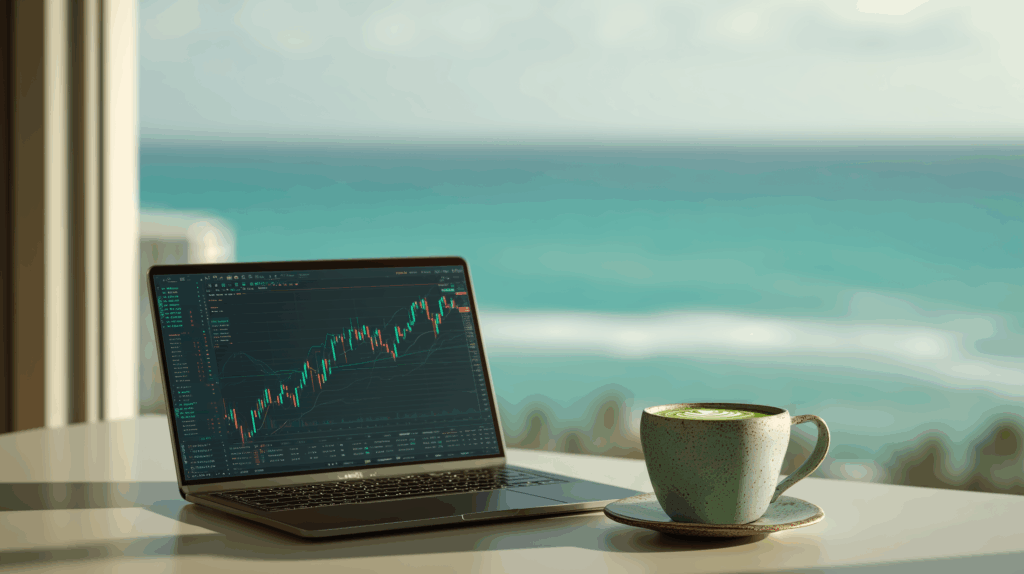
Influencers love to tell you that you can trade from the beach. They don’t tell you about trading from the bathroom stall at your office because your boss is looking for you.
For most of us, trading starts as a second job. You have a “Main Gig”—consulting, engineering, sales—that pays the mortgage. And you have the “Exit Plan”—trading—that is supposed to eventually buy your freedom.
But the Main Gig has gravity. It has deadlines. It has clients. It has a paycheck that hits every two weeks like clockwork.
Nassim Taleb famously said: “The three most harmful addictions are heroin, carbohydrates, and a monthly salary.” (Yes, I know I quote Taleb a lot. What can I say, he’s very quotable)
He was right. That steady check wants to pull you in and keep you there. If you are not careful, the Main Gig will eat your trading alive. You will miss setups because you were in a Zoom meeting. You will revenge-trade on your lunch break because you feel guilty for being inactive.
I developed a system to fight this gravity. I call it the Exit Strategy Operating System (ESOS).
Redefining “Exit Strategy”
In finance, an exit strategy is how you sell a position. In Chart Drifter, the Exit Strategy is how you leave your old life.
The ESOS isn’t about finding the perfect trade. It is the minimum acceptable daily process I used to keep my trading heartbeat alive during the years when my consulting workload was at its peak. Each night I would promise myself that tomorrow I would focus on trading, and each morning I would find an email requiring a quick and extensive reply. Before I knew it I was relaxing after supper, not having even opened a chart.
The Problem: The “All or Nothing” Trap
When work gets busy, the amateur trader drifts away. “I’m too swamped this week. I’ll look at the charts on the weekend.”
This is death. The market is a flow. If you step out of the river for five days, you drown when you jump back in. You lose your feel for the price action.
The goal of ESOS is to keep you in the river without drowning in work.
The Protocol: The Minimum Viable Heartbeat
You don’t need to stare at the screen for 8 hours. You just need a pulse.
1. The Morning Pass (Timebox: 15 Minutes)
I implemented this rule a long time ago: The Market gets paid before the Boss. This happens before the “Main Gig” email opens. Once you open Outlook or Slack, you are dead. The gravity has you.
I sit down with my tea and run two checks:
- The Slow Engine (4H/Daily Charts): Is the big picture setting up? Is Bitcoin approaching a major level?
- The Fast Engine (15m Charts): Is there a scalp setup forming right now?
If yes: I prep the trade. If no: I close the charts.
This is the hard part. If the market is messy, you must have the discipline to walk away. You cannot force a trade just because you have 15 minutes free.
2. “Armed,” Not “Watching”
If I find a setup, I do not sit there and watch candles print. I am a consultant. That data isn’t going to analyze itself.
I switch to “Armed Status.” This doesn’t always mean a price level. Sometimes it is a specific set of circumstances—an RSI divergence or a volatility contraction. I identify the condition that demands action, and I set a specific Sentinel to watch for it.
Then I say the mantra out loud: “Armed. I don’t babysit armed systems.”
Then I go to work. I give the Main Gig my full attention, knowing that if the market needs me, my Sentinel will summon me.
3. The Surgical Strike (The Interruption)
When that alert fires at 10:30 AM, I am usually deep in a valuation model. I do not try to multitask. I treat trading as a surgical strike.
This is where I use my Save State Protocol. I dump my consulting “RAM” into an external note, switch contexts completely, and focus on execution.
- Triage (30 Seconds): Is the setup still valid? Or did price smash through my level?
- Prep (2 Minutes): Calculate size. Place the limit order.
- Retreat: Re-arm the “All Clear” alert and close the window.
If I can’t execute in under 5 minutes, I don’t take the trade. If you are fumbling with indicators while your client is waiting on a deliverable, you are going to make a mistake. Speed is safety.
The Remote Work Advantage
This system thrives if you work from home.
If you are in an office, 50% of your day is likely wasted on non-productive “water cooler” chat, unnecessary meetings, and looking busy. Taking 5 minutes to execute a trade isn’t stealing from your employer; it is just reclaiming the time you would have spent hearing about Bob’s weekend.
In fact, I found that having the ESOS running made me a better consultant. Knowing I was building my exit gave me enthusiasm. It reminded me that the “grind” wasn’t forever. It was just funding the operation.
The Safety Valve: The “No Trade” Log
Here is the psychological hack that saves me.
I have a quota: I must log one trade entry every single day. This forces me to show up. But it creates a danger: What if the market sucks? Do I force a bad trade just to hit my quota?
No. The ESOS has a safety valve. If the market offers nothing, I am allowed to log: “No Trade (Conditions Not Met).”
This counts as a “Win.”
- Taking a good trade = Win.
- Logging “No Trade” when the market is bad = Win.
- Forcing a bad trade = Loss.
- Forgetting to look = Loss.
By rewarding myself for not trading, I satisfy the urge to “do something” without losing money.
Escaping the Well
The Main Gig wants you to be an employee. The Market wants you to be a victim. The ESOS allows you to be a Double Agent.
You perform your day job well enough to keep the cash flow, but your real loyalty is to the Exit. You keep the trading machine running in the background, low-hum, always armed, waiting for the moment to fire.
One day, the trade will hit. The account will compound. And you won’t need the Operating System anymore because you’ll have exited the building.
Until then: Arm the system. Don’t babysit.
The Fine Print I am a consultant, but I am not your financial advisor. The content on ChartDrifter is a personal log of my strategies and is strictly for educational and entertainment purposes. Never trade with money you cannot afford to lose.